
Position and separate
Identify permitted body contact, label areas that must remain visible, and fragile or projecting parts. Describe whether adjacent products must avoid contact and how the insert sits inside the box.
01Kehong · Finished packaging
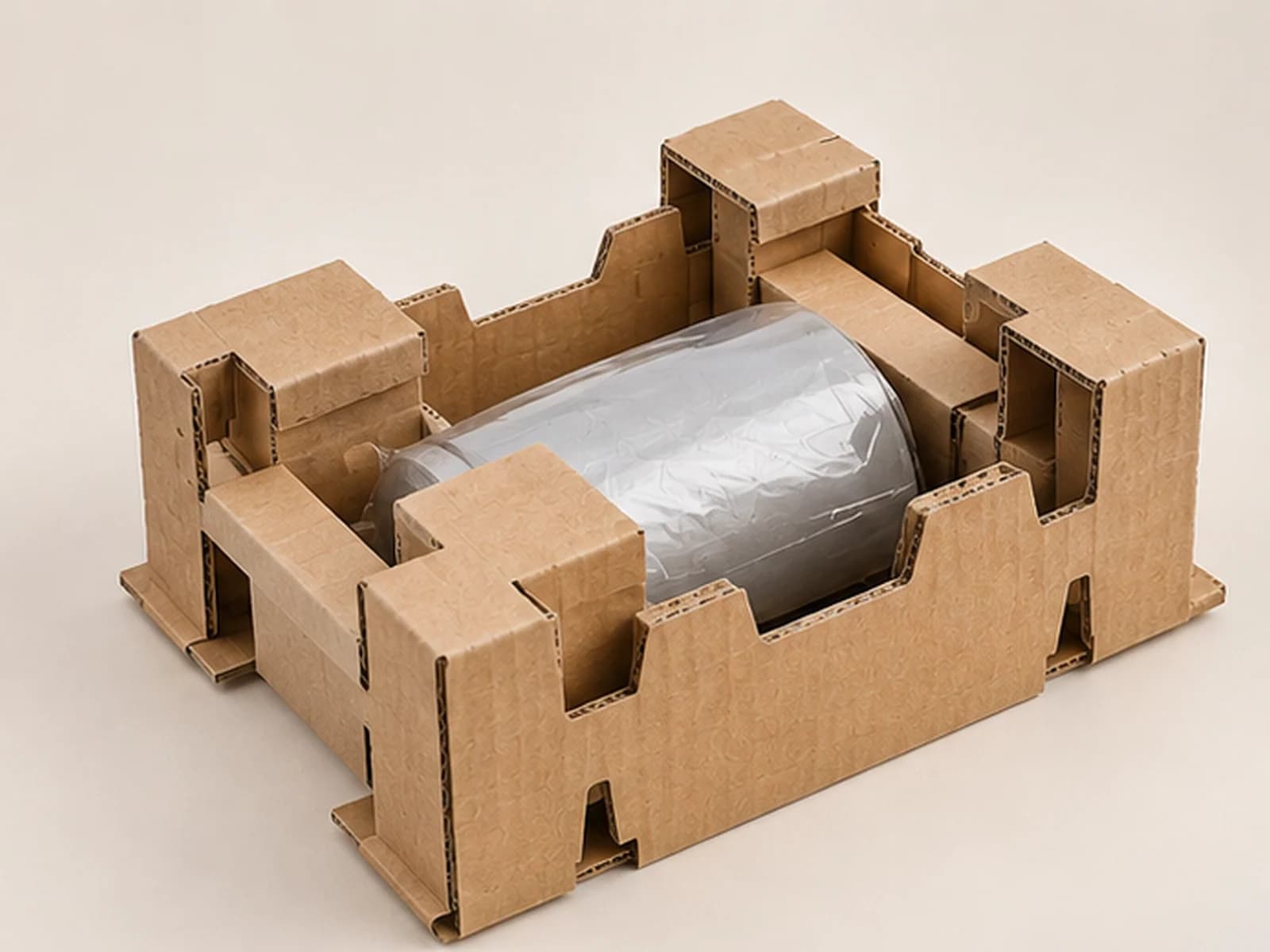
Die-cut corrugated inserts that secure and protect products inside a pack.
Procurement specification
An insert is a converted component inside a pack. Its contact points and clearances depend on the actual products and the usable space of the outer box. A color or flute choice alone does not define a fitted insert.
Identify permitted body contact, label areas that must remain visible, and fragile or projecting parts. Describe whether adjacent products must avoid contact and how the insert sits inside the box.
State the display orientation, removal sequence and where fingers can reach. Include cap, pump, spout, handle and lid overhang; a bottle-body diameter alone is insufficient.
For inserts only, supply the existing box’s usable internal dimensions and a physical sample or drawing. For a complete pack, list the outer box and each insert/divider separately, with independent order quantities.
Prepare roll, sheet or die-cut handoff information in the materials guide. Compare the complete component scope in the quotation checklist.
These are packaging concepts, not customer cases. Illustrated item counts are not entered as purchasing quantities.
Packaging concept
Discuss separation, contact areas and easy removal of three glass jars. A layout drawing does not demonstrate transport performance.

| Select / component | Role and information to provide | Purchase quantity and notes |
|---|---|---|
Keeps the chosen layout and separates contact points. Each product envelope, permitted contact areas, orientation and finger access. | ||
Separates adjacent jars where required. Jar diameter, height, lid overhang, filled weight and contact limitations. | ||
Contains and presents the complete arrangement. Required internal space, opening style, artwork and delivery state: flat or assembled. |
Outer pack · contact points · components
Choose the components you need and add their quantities and fit requirements. Request one component or plan the complete pack; fit is reviewed against your product and samples.
Reference composition only. Your dimensions, quantities and notes are recorded in the fields and procurement summary; the image does not change to scale.
Procurement answer
A corrugated insert positions or separates products inside the matching outer box. Develop its openings, supports and fold structure around the actual product, packing orientation and removal method, then review the complete loaded pack.
If movement control matters, evaluate support and clearance with the proposed paper and flute. If the insert is visible, also review edge color, print and finish. A universal clearance or load capacity cannot be inferred from flute alone.
Discuss cut geometry, folding, flute, paper surface, color and logo printing. The insert and outer box should be sampled together when either material or product changes.
Foshan Kehong Paper Products Co., Ltd. is a paper materials, corrugated board and custom paper packaging manufacturer in Foshan, Guangdong, China.
Company profile · Factory and production context · Manufacturing and converting capabilities
Include maximum product dimensions, weight, item count, outer-box internal dimensions, packing orientation, quantity and a photo or drawing.
Send your specification02Overview
Insert geometry, product contact points and packing sequence are reviewed with the outer package and transit requirements.
Use these formats to discuss your brief. Include a reference image; construction and availability are confirmed for your project.
05Customization and applications
For shipping protection or shaped positioning, mark fragile areas, permitted contact points and orientation. Include the product weight and usable outer-box space so the insert can be reviewed as part of a complete pack.
Share the expected packing sequence and any preferred material reference. Folded supports, cut-outs and board selection must work together; printed or visible surfaces should be identified before the sample is planned.
Try assembly, loading and removal with the actual product, then agree the handling or transit checks required. A fitted insert alone is not evidence that the full package meets a shipping test.
Selection example
A product envelope, usable interior and finished component size are different measurements. These original schematics explain the relationships; they are not production drawings, customer projects or performance evidence.
Two opposing slots illustrate an interlocking divider. Slot width, depth, board thickness and supply form still need a confirmed drawing.
The grid separates cells; it does not show a fitted support. Mark mixed cell sizes and the required divider height on a sketch.
Measure the widest product envelope, including caps or projections. Check loading, removal and the complete outer pack with a sample.
A = product or loaded footprint. B = usable box interior or support boundary. Confirm space for board, loading and removal on the actual sample; there is no universal clearance value here.
Record product A, usable box interior B, orientation, cell layout and divider height. Final cell clearances and cutting dimensions are confirmed together with the board and slots.
Record the drawing revision, assembly sequence, loading and removal observations, and any product-to-product or product-to-board contact. Mark undecided points for review.
A blank fit sample does not approve print or finish. Agree the sample type, handling or transit checks and acceptance points separately; a diagram is not a test result.
Use the existing enquiry checklist — undecided details are welcome · Compare a layer-separation task
Use these points to describe your requirements. For undecided details, write Not sure / Need recommendation and share the intended use or a reference photo to start the discussion. Specifications, materials and finishes are confirmed after project review.
Start with the intended use, product dimensions or a reference photo, quantity and destination where known. For undecided material, structure or finish, write Not sure / Need recommendation and describe the result you need.
A structural sample checks fit and handling; artwork or finish proofs check presentation. Agree the required sample type, material, review criteria, sample fees and timing before arranging that stage.
Confirm the selected specification, artwork status, quantity, delivery destination and packing form. MOQ, price and actual lead time remain subject to the quotation; flag any required contact-use documentation or testing for separate review.
Describe whether the product needs shaped positioning or separation into cells. Review inserts for specific contact points and dividers for repeated compartment layouts.
An initial concept can start with the product and proposed packing direction. Mark the box dimensions as provisional; final fit and the sample review depend on the agreed outer pack.
These pages describe packaging types for project review. Send the dimensions and quantity you need; final specifications and MOQ are confirmed in the quotation.
06Buyer decision support
07Project collaboration
We will review structure, material, print and delivery requirements before confirming the next step.