
Map the layer footprint
For stacked cartons or pallet layers, share the item pattern, supporting area and required pad outline. Explain whether the job is surface separation, covering gaps or separating successive layers.
01Kehong · Finished packaging
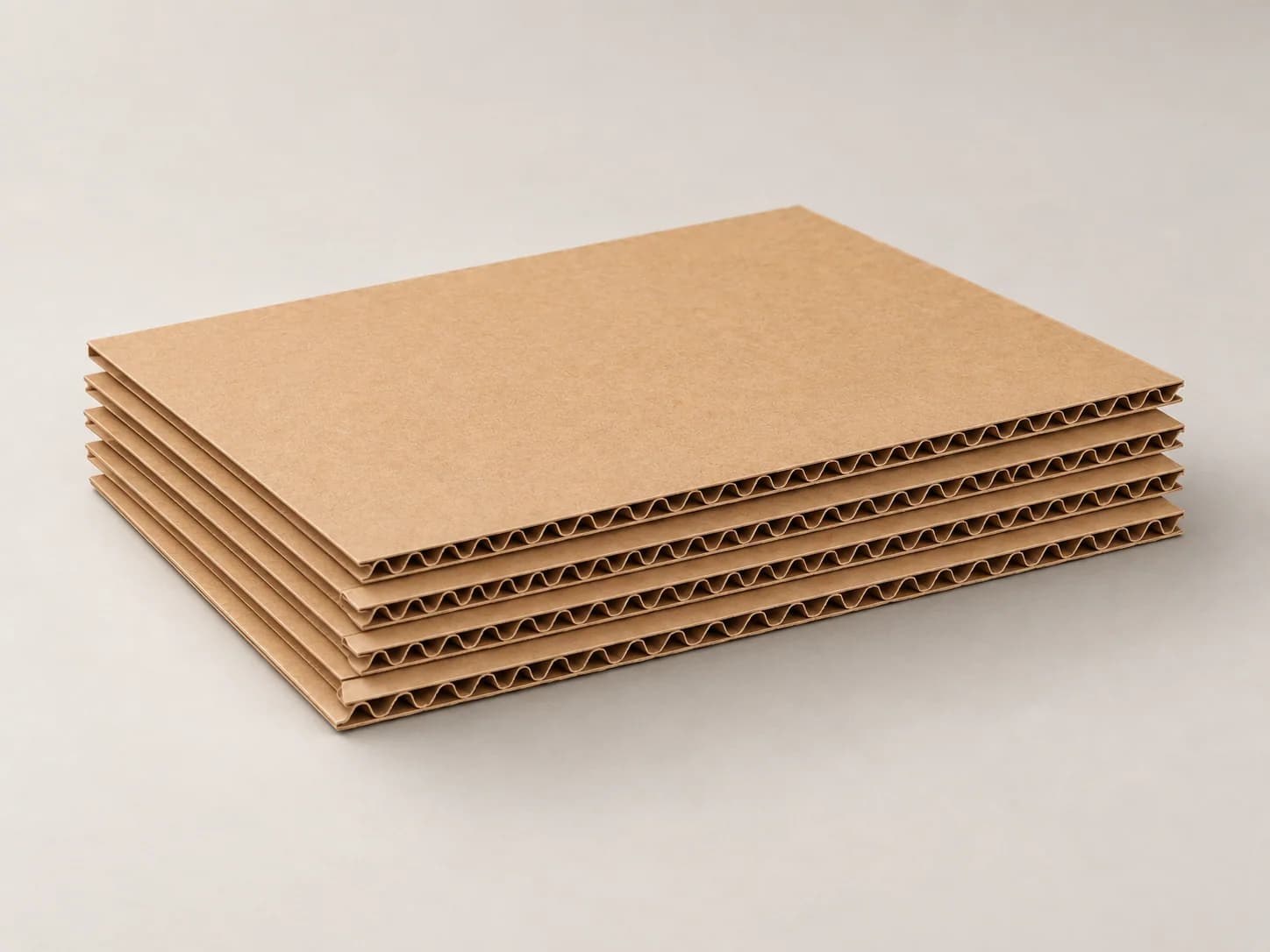
Flat corrugated pads used between product layers during packing and transport.
02Overview
Layer-pad dimensions, stack pattern and corrugated construction are reviewed with the shipment and product-protection requirement.
Use these formats to discuss your brief. Include a reference image; construction and availability are confirmed for your project.
05Customization and applications
For stacked cartons or pallet layers, share the item pattern, supporting area and required pad outline. Explain whether the job is surface separation, covering gaps or separating successive layers.
Describe the load above the pad, any unsupported gaps, moisture exposure and contact surfaces. Corrugated construction, surface requirements and cut shape need review for that stacking arrangement.
Try the intended layer pattern and check pad fit, alignment and handling. Agree any stacking or transit evaluation for the complete pack; adding a pad does not by itself establish stability or load capacity.
Selection example
A product envelope, usable interior and finished component size are different measurements. These original schematics explain the relationships; they are not production drawings, customer projects or performance evidence.
Use the usable box interior after liners and other components are included. The dashed pad outline is not a preset clearance. Do not copy the outside carton dimensions.
Show the loaded footprint, supporting contact areas and unsupported gaps. A pallet's nominal size alone does not describe this arrangement.
State whether the pad covers, separates or is expected to support another load. A cover is not evidence of increased box strength or stack stability.
A = product or loaded footprint. B = usable box interior or support boundary. Confirm space for board, loading and removal on the actual sample; there is no universal clearance value here.
Record loaded footprint A and usable interior or support boundary B. Mark cut-outs, edges, unsupported areas and contact surfaces before setting a pad size; no universal deduction is assumed.
Record the layer pattern, load above each pad, moisture exposure and how the stack is handled. Check alignment and movement with the intended contents and pack.
Record the agreed stacking or transit evaluation and who will perform it. A pad does not establish a new carton strength rating; material, outline or load changes require review.
Use the existing enquiry checklist — undecided details are welcome · Need individual product positioning?
Use these points to describe your requirements. For undecided details, write Not sure / Need recommendation and share the intended use or a reference photo to start the discussion. Specifications, materials and finishes are confirmed after project review.
Start with the intended use, product dimensions or a reference photo, quantity and destination where known. For undecided material, structure or finish, write Not sure / Need recommendation and describe the result you need.
A structural sample checks fit and handling; artwork or finish proofs check presentation. Agree the required sample type, material, review criteria, sample fees and timing before arranging that stage.
Confirm the selected specification, artwork status, quantity, delivery destination and packing form. MOQ, price and actual lead time remain subject to the quotation; flag any required contact-use documentation or testing for separate review.
A layer-pad brief concerns separation between stacked layers. If individual items also need positioning, include an insert or divider requirement in the same review.
Send the usable pallet area, item arrangement and proposed pad outline, noting gaps or overhang. The pallet dimensions alone may not describe the actual contact and support area.
These pages describe packaging types for project review. Send the dimensions and quantity you need; final specifications and MOQ are confirmed in the quotation.
07Project collaboration
We will review structure, material, print and delivery requirements before confirming the next step.