
01Packaging Decision Center

Corrugated Insert vs Paperboard Insert

Compare corrugated and paperboard inserts by product support, folded geometry, presentation, clearance and assembly.

Buyer decision supportFoshan, Guangdong, China

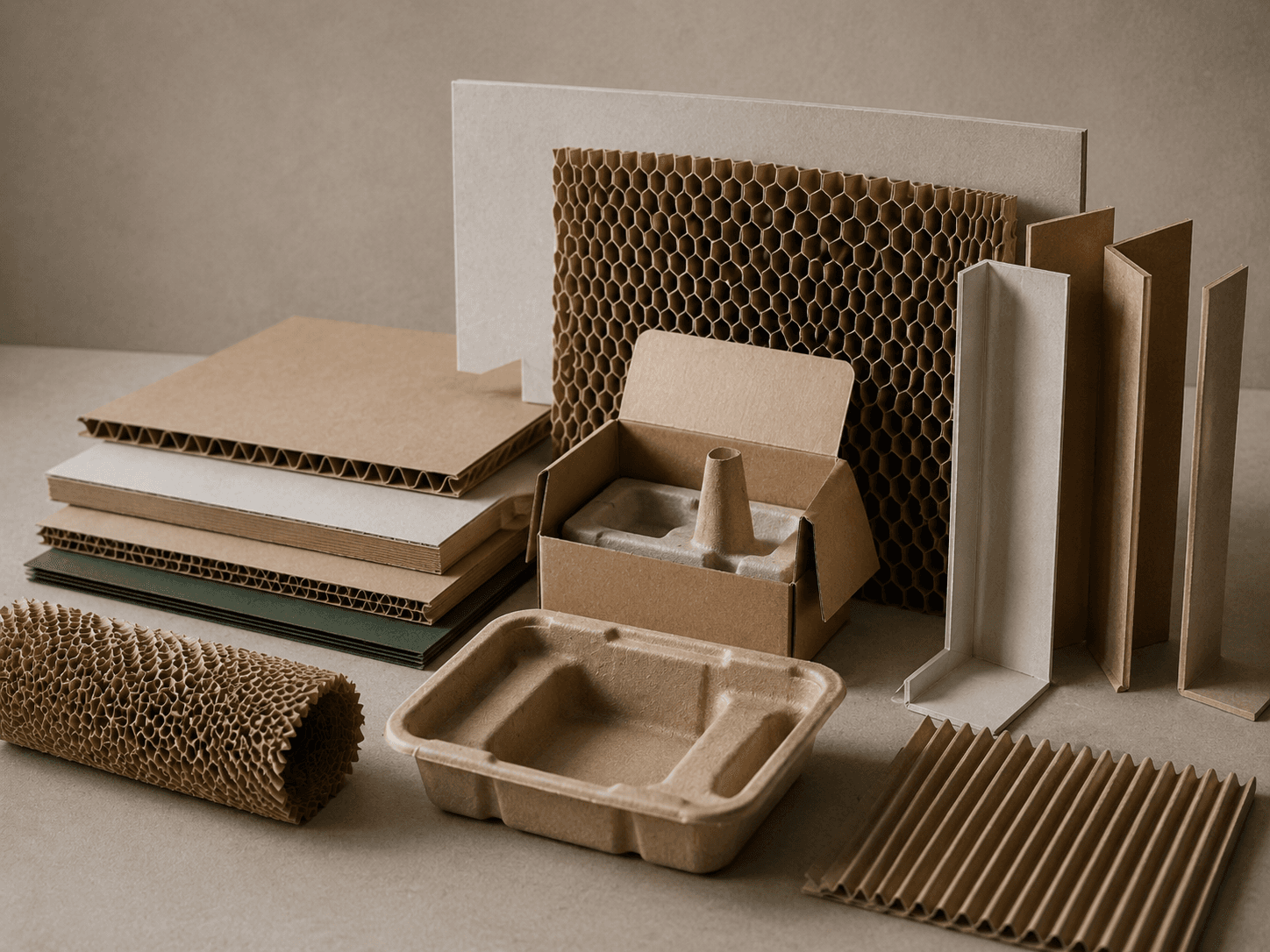
Corrugated divider and folded paperboard insert structures for product protection

Direct answer

What should a buyer know first?

Corrugated inserts suit protective spacing, partitions and structures that benefit from a fluted profile. Paperboard inserts suit compact folded platforms, collars and presentation geometry. Neither can be selected reliably without the product dimensions, orientation, clearance and outer box.

Comparison

Compare the decision factors

Insert choice begins with the support points required by the product.

FactorCorrugated insertPaperboard insert
ProfileFluted, with more structural depthCompact folded sheet construction
Common geometryPartitions, pads, cradles and deeper supportsPlatforms, collars, folded pockets and display supports
PresentationVisible flute/edge may be part of the lookClean folded presentation surface
Key approvalSupport and compartment fitFold accuracy and product retention

02

Define what the insert must control

An insert may locate a product, separate items, support a fragile area or organize the unboxing layout. State these jobs before choosing the material.

A divider primarily separates compartments. A die-cut insert can also create shaped supports, platforms or locking features. These terms should not be treated as interchangeable without a drawing.

03

Clearance must include the real product

Product dimensions can vary, and protrusions such as caps, closures or cables can be more important than the main body size. Identify contact points that must not carry pressure.

The outer box, insert and product should be sampled together. Changing the board or surface wrap can alter usable clearance.

04

Assembly affects the decision

Some inserts arrive flat and require folding; others are supplied assembled or are built into the packing sequence. Ask who assembles the insert, how the product is loaded and whether parts can be placed consistently.

A structure that looks precise on a dieline may be slow or ambiguous at the packing station. A sample exposes those issues before production.

05

Presentation and print

Visible inserts can carry a surface color or print, while hidden inserts may prioritize clear identification and repeatable fit. Provide a reference for the desired appearance and mark which faces remain visible.

The chosen insert material, openings and outer-box relationship must be confirmed together for the individual project.

Buyer checklist

Put these details in the brief

  • Product CAD, drawing or physical dimensions
  • Product orientation and contact points
  • Outer-box internal dimensions
  • Divider, platform or retaining function
  • Assembly and packing sequence
  • Visible surfaces and print needs

Buyer questions

Frequently asked questions

Is a divider the same as an insert?
A divider is one type of insert used to separate compartments. Inserts can also cradle, elevate, locate or retain a product.
How much clearance should an insert have?
There is no universal allowance. It depends on product tolerance, board, folding, packing method and the required fit.
Can the insert be printed?
Depending on material and structure, visible insert surfaces can be considered for print. Mark the visible faces and confirm the proposed route.

Project-specific confirmation

Turn this decision into a packaging specification.

Send the product, dimensions, quantity, artwork status and destination. Unknown details can remain “to be confirmed.”

Request a Custom Packaging Quote