
01Packaging Decision Center

Corrugated vs Paperboard Packaging

Compare corrugated and paperboard packaging by structure, surface presentation, folding, inserts and end use for a clearer custom packaging brief.

Buyer decision supportFoshan, Guangdong, China

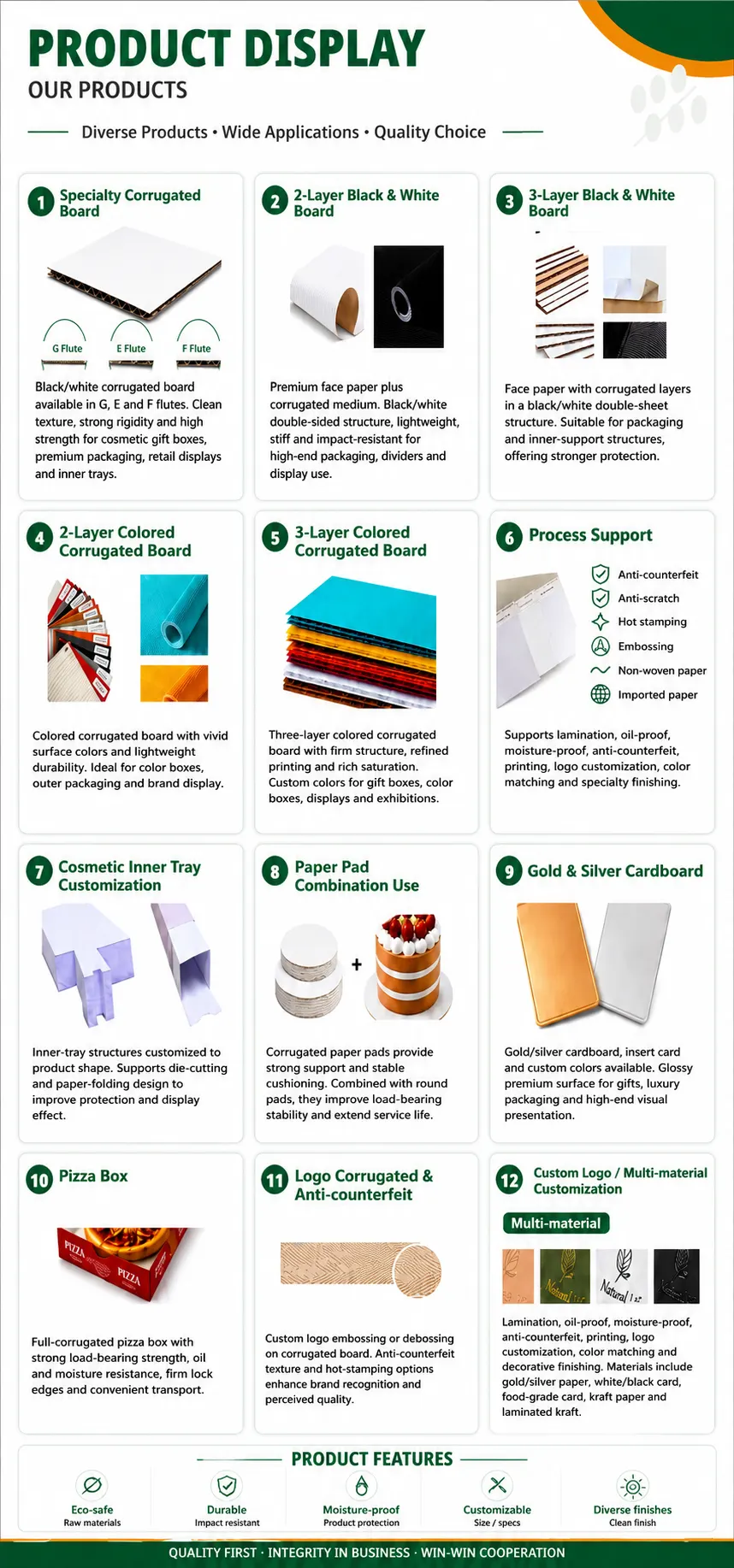
Paperboard carton and corrugated packaging material references

Direct answer

What should a buyer know first?

Choose corrugated when the package needs a fluted structure, more body or protective geometry. Choose paperboard when a compact folding carton and smooth presentation surface are the main priorities. Product load, panel size, insert design and distribution conditions can change the decision.

Comparison

Compare the decision factors

The useful distinction is structural, not simply visual.

CriterionCorrugatedPaperboard
ConstructionLiners with a fluted mediumCompact solid board sheet
Typical roleMailer, shipping, bakery and protective structuresFolding cartons, sleeves and presentation packs
Edge/profileFlute profile can remain visibleThin, compact folded edge
Insert approachUseful for deeper protective shapesUseful for precise folded platforms and presentation

02

Decide from the product and journey

Start with what the pack must hold, how it will be filled and what handling it receives before the customer opens it. A retail carton and an e-commerce mailer may carry the same product but solve different problems.

If the pack must also act as the shipping container, corrugated is often the first structure to evaluate. If it sits inside another shipper and presentation is primary, paperboard may be the clearer starting point.

03

Surface and print are material-dependent

Paperboard often provides a compact, familiar folding-carton surface. Corrugated can also support high-quality presentation, especially with fine flute and an appropriate liner, but the board profile and conversion must be considered.

Do not approve color or fine detail from a digital image alone. Printed samples should use the proposed material surface when appearance is critical.

04

Structure can outweigh material preference

Large panels, locking tabs, open windows and load paths can make a preferred material unsuitable in a particular construction. Inserts also change the internal space and the way pressure is transferred to the product.

Share a dieline if one exists, but identify whether it was built for the current material. A drawing prepared for paperboard may need more than a simple material substitution to become a corrugated structure.

05

When a hybrid system makes sense

Some projects use a presentation carton with a separate shipper, or combine an outer box with an insert of another paper-based construction. Treat the outer pack, insert and shipping pack as one system during fit review.

Confirm each material layer, finished dimension and packing relationship as part of one project specification.

Buyer checklist

Put these details in the brief

  • Product size and weight
  • Retail, takeaway or shipping journey
  • Required presentation surface
  • Panel size and closure style
  • Insert and clearance needs
  • Whether a separate shipper is planned

Buyer questions

Frequently asked questions

Is paperboard suitable for shipping?
It depends on the product and distribution system. A paperboard carton may need a separate protective shipper; confirm the full packing method rather than assuming the retail carton is the shipping pack.
Can corrugated packaging look premium?
Yes, depending on flute, liner, print and structure. A physical printed sample is the safest way to evaluate the intended appearance.
Can I use a paperboard dieline for corrugated board?
Not automatically. Material thickness and folding behavior affect scores, slots, tabs and finished dimensions, so the dieline should be reviewed for the selected board.

Project-specific confirmation

Turn this decision into a packaging specification.

Send the product, dimensions, quantity, artwork status and destination. Unknown details can remain “to be confirmed.”

Request a Custom Packaging Quote