
Material for your converter
Ask for the required roll or sheet form where suitable. Provide roll width, or sheet length × width in mm, orientation, face requirements and quantity with its unit. Do not use a finished-box size as a sheet size.
Material purchasing
Compare black E-flute paper and 3-ply board: specify visible faces, cut edges, delivery form and converting requirements for your insert or packaging project.
Review visible cut edges, liner faces and product contact points. Specify which faces must be black, sheet dimensions and converting requirements; confirm the actual paper combination with a sample.
Compare material options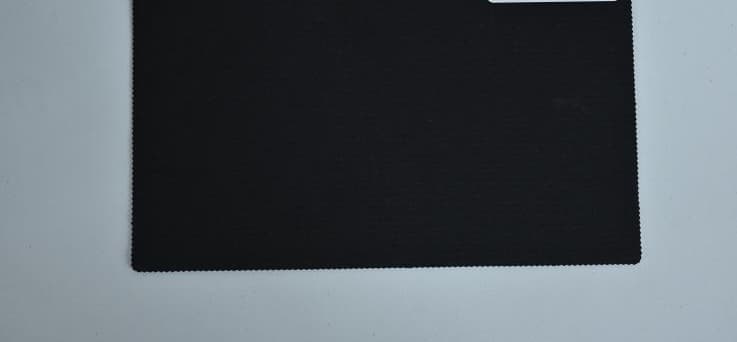
| Documented flute | E |
|---|---|
| Construction | Single face / 3-ply |
| Purchase specification | Cut format, dimensions, face colors, GSM, quantity/unit and converting use |
| Conditions to review | Sample fit, MOQ, lead time, performance and food-contact suitability where relevant |
Understand the material


A — Single face: one liner + exposed fluting
B — Single wall: two liners + one fluted medium
Liners are the flat paper faces; the fluted medium is the wave-shaped layer. Layer count does not establish thickness or protection performance.
Neutral layer colors explain construction, not Kehong color specifications. Confirm actual faces and cut edges with a sample.
Single-face material has one flat liner bonded to fluting. Three-ply board has two liners around one fluted medium. These are different constructions, even if the visible face looks alike.
The current material selection documents black E flute in single-face and 3-ply directions. It does not establish all-black layers, a standard caliper or a protection rating. Tell us whether cut edges remain visible in your finished component.
See documented combinations| Area | Buyer check |
|---|---|
| Visible face | Identify the outside, inside or both faces that must look black. Send the approved paper sample or appearance reference. |
| Cut edge and openings | Mark edges visible after die-cutting, bottle openings and finger notches. Review a cut sample: a black face does not specify the color of the medium or reverse liner. |
| Contact and handling | Show where the product touches the material and where the buyer will grip it. Share product dimensions, protrusions and any surface sensitivity for sample review. |
The face photograph above has no scale and does not show the reverse or a layer section. Use the same sample ID for the face, reverse and finished cut-edge references; leave unconfirmed items open.
Ask for the required roll or sheet form where suitable. Provide roll width, or sheet length × width in mm, orientation, face requirements and quantity with its unit. Do not use a finished-box size as a sheet size.
Provide a drawing or the product dimensions for structure discussion, cutouts, crease lines and delivery state. Quote each part in pieces or sets and explain what one set contains.
Specify the outer box and internal components separately, including the quantity of each. Confirm assembly, appearance and packing requirements rather than assuming they are included in the material price.
Record the material family and construction; required faces and visible cut edges; roll width or sheet dimensions; quantity and unit; where the material is used; and the next process. If paper grammage, thickness or a tolerance is already specified by your converter, include it and identify the measurement object. Otherwise describe the use and discuss a sample before fixing the specification.
Choose corrugated material
Compare up to three materials. Include cut format, dimensions, GSM and quantity in your request so we can review supply options and pricing.
Neutral construction reference; confirm the selected paper's color, flute and thickness with a sample.
Black single-face and board directions for retail and presentation packaging.
Provide cut size, GSM/thickness, quantity and converting use.
Neutral construction reference; confirm the selected paper's color, flute and thickness with a sample.
Black single-face and board directions for retail and presentation packaging.
Provide cut size, GSM/thickness, quantity and converting use.