
01Factory Knowledge

How Die Cutting Works for Custom Paper Boxes

Understand how a box dieline becomes cut, scored and folded paper packaging, and what buyers should review before tooling and production.

Buyer decision supportFoshan, Guangdong, China

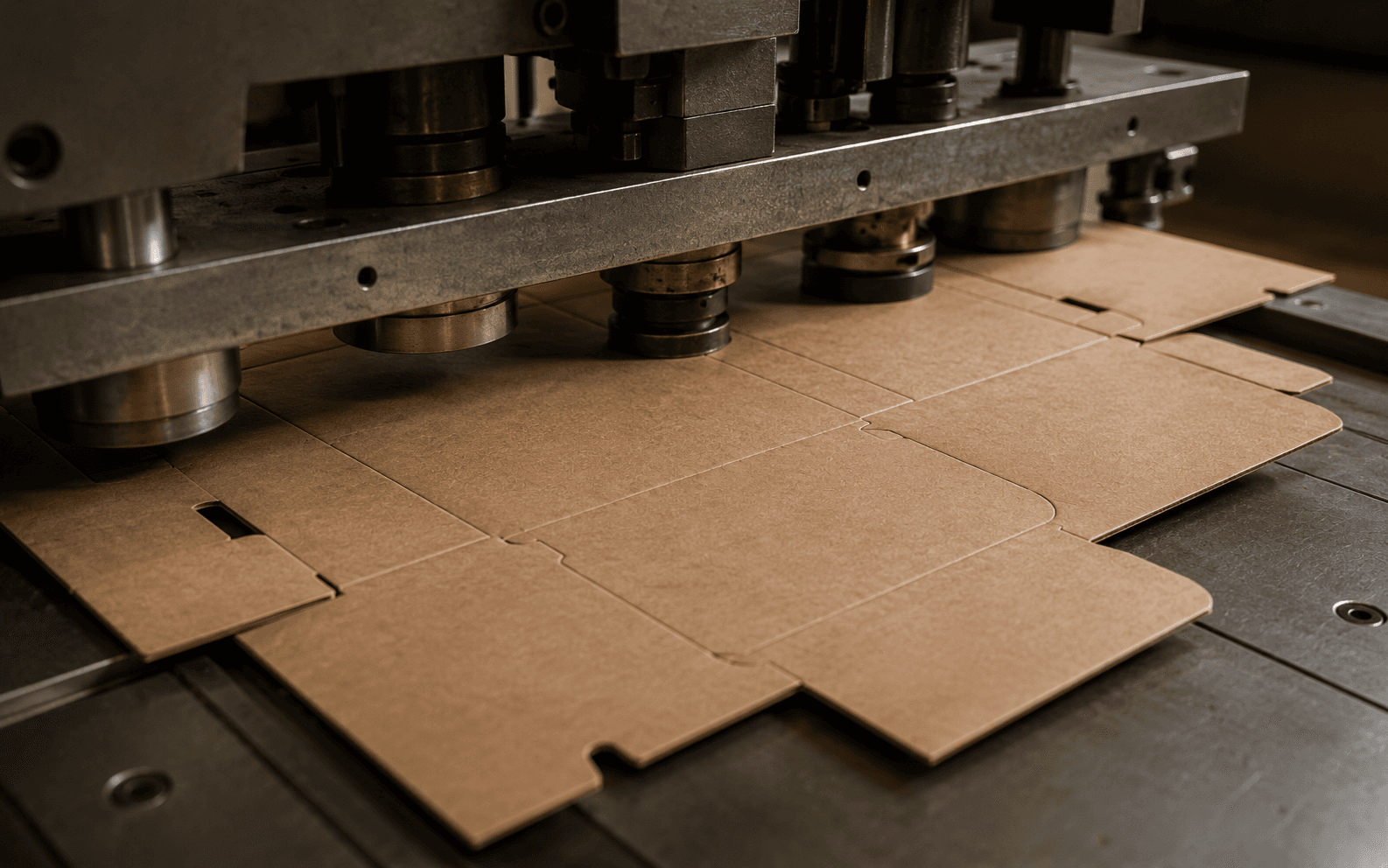
Paper packaging die cutting process with converted box blanks

Direct answer

What should a buyer know first?

Die cutting converts a printed or prepared sheet into the box shape by creating the required cuts and scores. The tooling follows the confirmed dieline, so material, dimensions, locks, windows and fold behavior must be reviewed before production.

02

The dieline defines more than the outline

Cuts separate the shape; scores guide folding; slots, windows and locking details create function. Their spacing depends on the selected material and finished geometry.

A visually similar box can use a different dieline when board build, size or closure changes.

03

Printing and cutting must register

Artwork is positioned around cut and fold lines with bleed and safe areas. Critical borders placed too close to a cut can make normal production variation more visible.

Windows and printed frames need particular care because small shifts are easy to see. The sample should establish which alignments are critical.

04

Scores must suit the board

A score helps the material fold along the intended line. Its behavior depends on board, direction, surface and geometry. Inadequate scoring can contribute to difficult assembly or visible cracking.

Changing material after structural approval can require another review of scores and fold performance.

05

What buyers should approve

Approve the drawing revision, finished dimensions, orientation, closure, window/insert relationships and appearance around cut edges. Use a sample where these points affect the project.

The die-cutting setup should follow that approved material and drawing rather than an earlier visual concept.

Buyer checklist

Put these details in the brief

  • Confirmed dieline revision
  • Selected material and direction
  • Critical cut and window positions
  • Score and fold behavior
  • Artwork safe areas
  • Assembled sample approval

Buyer questions

Frequently asked questions

Is die cutting only for unusual shapes?
No. Standard folding cartons and many corrugated structures also rely on die-cut outlines, scores, slots or locks.
Can the die be made before artwork is final?
The structure may be finalized first, but tooling should follow the confirmed production drawing and change control.
Why can print look misaligned near a cut?
Print-to-cut registration has production tolerances. Avoid ultra-tight frames at trim and identify critical alignment during prepress.

Project-specific confirmation

Turn this decision into a packaging specification.

Send the product, dimensions, quantity, artwork status and destination. Unknown details can remain “to be confirmed.”

Request a Custom Packaging Quote